BAUN Academics U.S. Study: How Do Energy, Culture, and Economic Growth Affect Sustainable Development ?
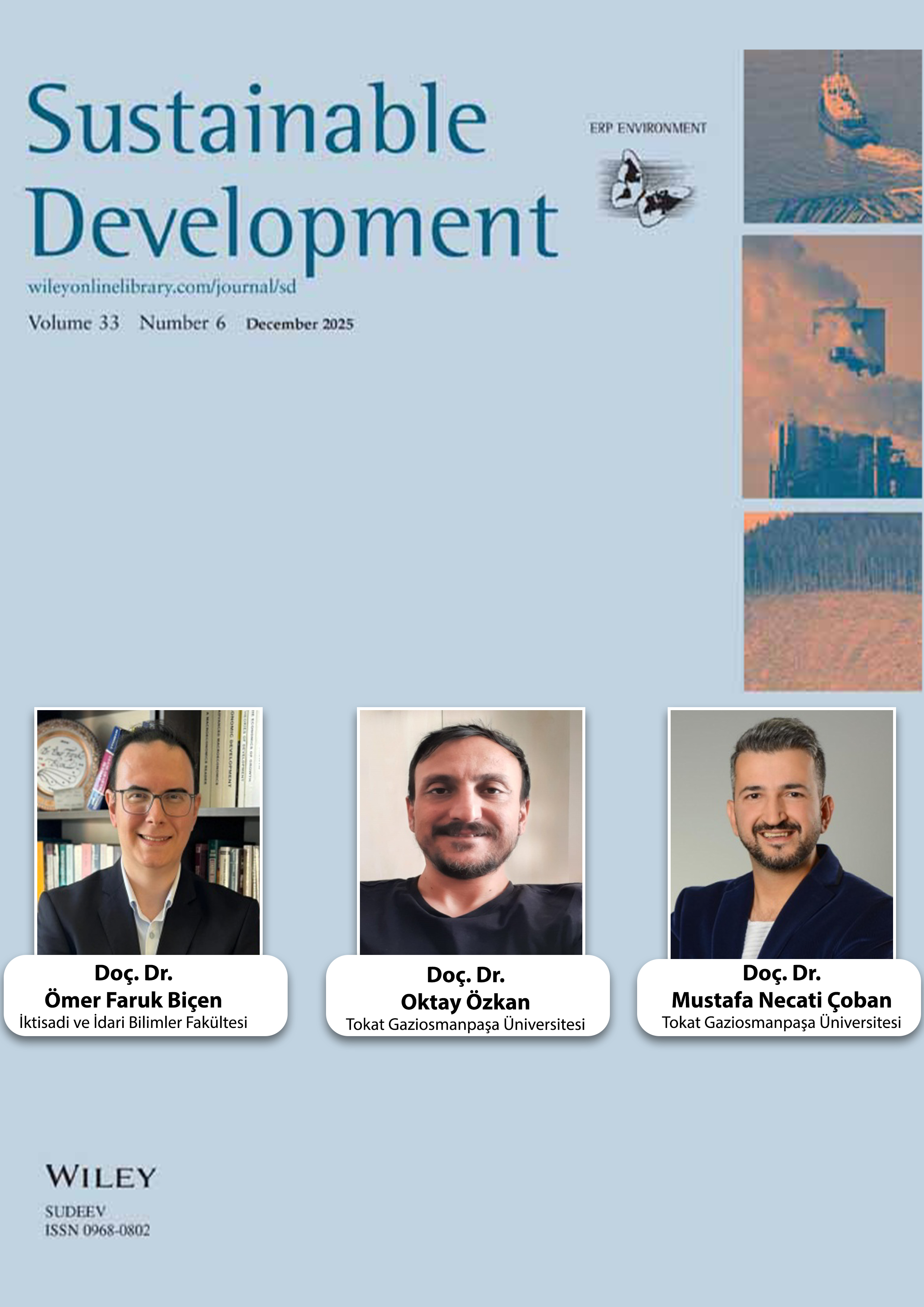
An academic study signed by scholars including Assoc. Prof. Dr. Ömer Faruk Biçen from the Department of Economics at Balıkesir University (BAÜN) Faculty of Economics and Administrative Sciences has made a significant contribution to the literature by comprehensively examining the role of energy use, cultural globalization, economic growth, geopolitical risks, and currency value in shaping sustainable development in the United States using modern indicators.
The study titled “Linking Energy Mix Quality and Cultural Globalization to Sustainable Development in the United States: The Role of Economic Growth, Geopolitical Risks, and Currency Power,” conducted by Assoc. Prof. Dr. Ömer Faruk Biçen from BAÜN and Assoc. Prof. Dr. Oktay Özkan and Assoc. Prof. Dr. Mustafa Necati Çoban from Tokat Gaziosmanpaşa University, was published in the journal “Sustainable Development,” which is ranked in the top tier (SSCI–Q1) of international journal rankings.
Assoc. Prof. Dr. Ömer Faruk Biçen stated: “We examined the effects of the relationships between energy, culture, and economic growth on sustainable development in unprecedented detail.”
Providing information about the study examining the main factors affecting sustainable development in the United States, Assoc. Prof. Dr. Ömer Faruk Biçen stated that the research focuses particularly on the impacts of clean energy, cultural globalization, economic growth, geopolitical risks, and currency value on sustainable development. He emphasized that these issues are of great importance not only for policymakers and the business world, but also for academics.
Stating that the study reveals topics that have rarely been addressed before, Biçen noted that new indicators were used to measure sustainable development. He also emphasized that the effects of energy, culture, and economic factors on sustainable development were examined in detail.
According to the results obtained from the analysis covering the period 1990–2022, clean energy use, cultural globalization, and geopolitical risks support sustainable development in the United States, while economic growth and changes in currency value have negative effects. Biçen added that the findings of the study could also serve as a guide for other countries.
Article link: https://onlinelibrary.wiley.com/doi/10.1002/sd.70605